




Bath Time Is the Best Time: How to Make It a Ritual Your Baby Looks Forward To
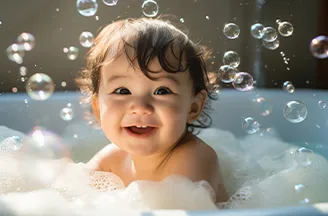
If you’ve spent any time scrolled through YouTube mom communities and your social feed, you already know that baby bath time opinions are divided. Oil massage before or after? Cold water or lukewarm? Everyone has their take, but here’s what research consistently shows – when done right, bath time isn’t just about hygiene. It’s an extremely rewarding experience that helps in more ways than you might think.
The Importance of a Baby Bath Routine
Babies do best with routines as their internal body clock and stress responses are still developing. This makes consistency the key. Research shows that consistent nightly routines, including bath time, can help infants fall asleep faster, get less disturbed sleep, and wake up with a better mood.[1] Bathing itself improves sleep because it raises body temperature slightly, allowing it to cool itself down after the bath, which signals the brain that it’s time to sleep.[2] So, a good bath routine is really a gift that keeps giving!
Getting the Basics Right
A few evidence-backed fundamentals that dermatologists and paediatricians agree on include:
- Use lukewarm water, at around 37 to 37.5 degrees Celsius, close to body temperature.[3] Try testing with your elbow or inner wrist, not your hand, since those areas are more temperature-sensitive.
- As the IAP advises, two to three baths a week should suffice for newborns and young infants.[3] Daily bathing can strip the skin’s natural oils and worsen dryness, a particular concern in the drier months across cities like Delhi-NCR and Pune.
- Always apply moisturiser immediately after a bath, while the skin is still slightly damp. This is when the skin barrier best absorbs hydration. Look for fragrance-free formulas with ceramides or colloidal oatmeal, both of which are supported by clinical evidence for maintaining infant skin health.[4],[5]
- Keep it short. Five to ten minutes is ideal.[3] Longer baths, however relaxing they seem, can actually lead to moisture loss rather than retention.
The Massage Connection
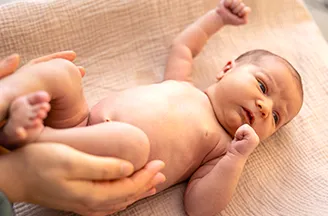
The traditional Indian practice of baby massage, or ‘tel malish’ might seem antiquated but it’s now supported by modern science. A review in Indian Pediatrics suggests that such massages support healthy weight gain, better sleep, and stronger parent-infant bonding, being particularly helpful for pre-term babies.[6]
Whether the massage comes before or after a bath is largely personal preference, but many parents find a warm bath after the massage helps get rid of excess oil and further relaxes the baby before sleep. If you do massage before bathing, choose an oil suited to your baby’s skin type and climate.
Good choices include sunflower, coconut, and mineral oils as they strengthen the skin barrier, but it’s best to avoid vegetable oils like mustard and olive oil.[3]
Making It a Ritual, Not a Rush
The difference between a stressful bath and a genuinely enjoyable one often comes down to environment and presence. Dim the lights slightly if you can, keep the room warm, and put your phone away. Babies read emotional cues extraordinarily well; if you’re tense or distracted, your baby will feel it. Narrate what you’re doing in a calm, warm voice, as this kind of interaction promotes early language development and learning.[7]
Over time, the cues add up. The sound of running water, the familiar smell of a gentle wash, the warmth of a soft towel. They become signals that your baby associates with safety, comfort, and you.
References:
- https://pmc.ncbi.nlm.nih.gov/articles/PMC2675894/
- http://link.springer.com/article/10.1186/s40101-023-00337-0
- https://www.indianpediatrics.net/feb2021/feb-153-161.htm
- https://pubmed.ncbi.nlm.nih.gov/35005855/
- https://www.tandfonline.com/doi/full/10.1080/09546634.2025.2487945
- https://link.springer.com/article/10.1007/s13312-010-0114-2
- https://pmc.ncbi.nlm.nih.gov/articles/PMC10873112/